
Ecdysis
June 2024 | Royal College of Art, London
Ecdysis is a part of the prominent Yu Mingfang Collection in China. The term, ‘ecdysis,’ describes the moment that a creature sheds its exoskeleton. As opposed to metamorphosis, many arthropods go through this process multiple times throughout their life. It is much more akin to the idea of molting or shedding. Removing this outer layer is necessary for new growth, yet it additionally leaves the organism quite vulnerable in this moment. This painting is defined by this moment of transition and ongoing new growth.
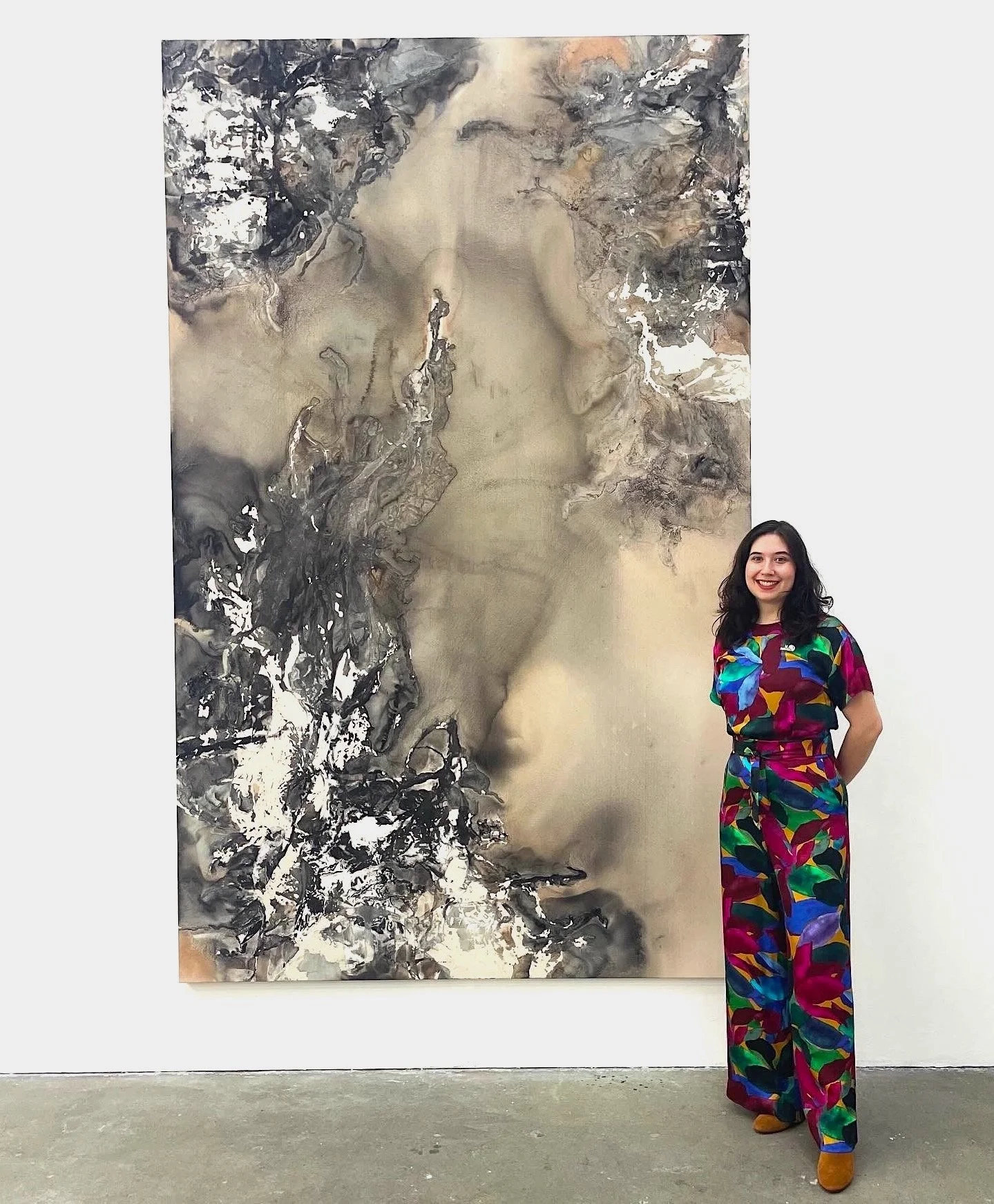
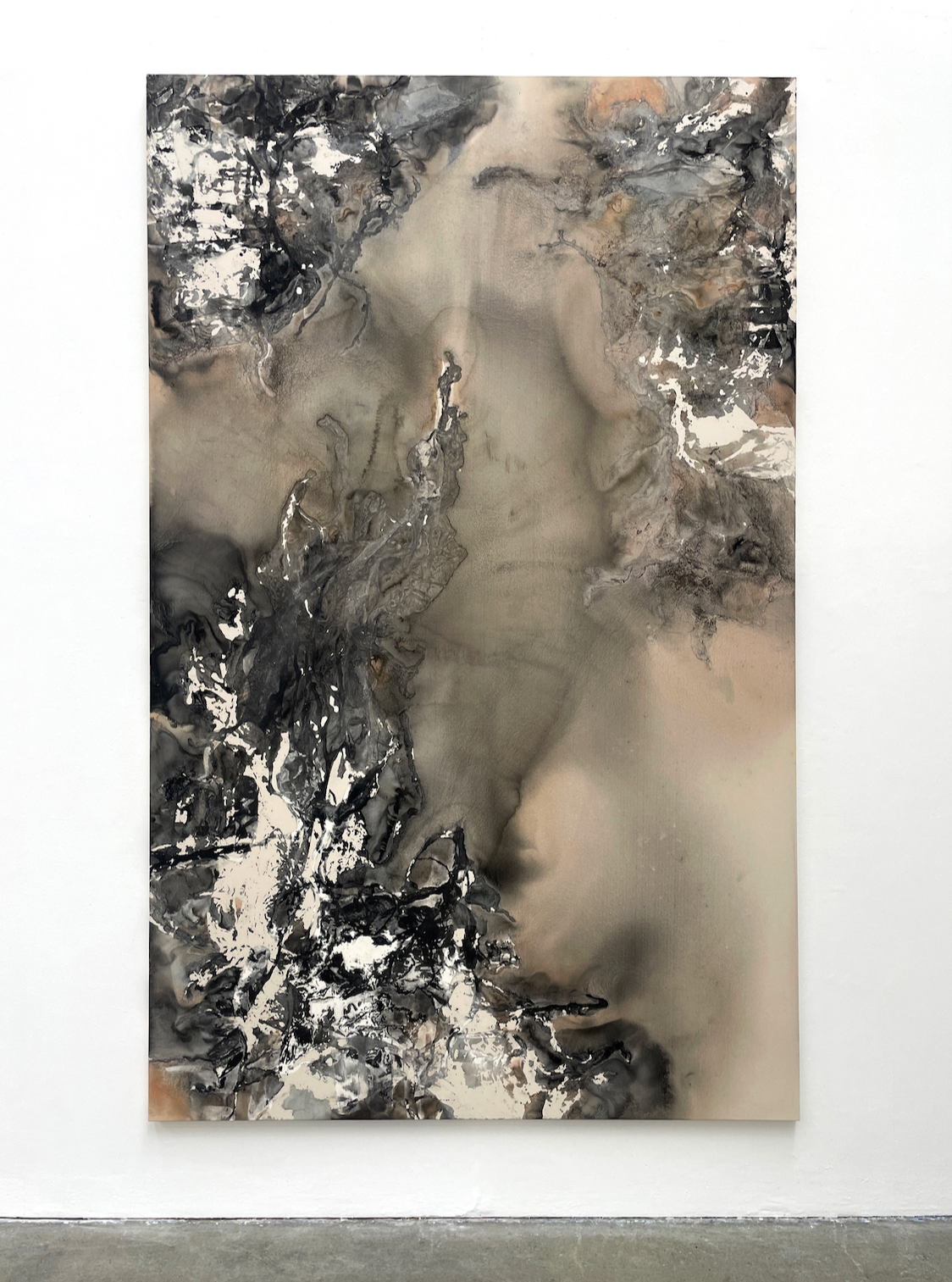
Ecdysis, ink and emulsion paint on canvas, 186x300cm, 2024
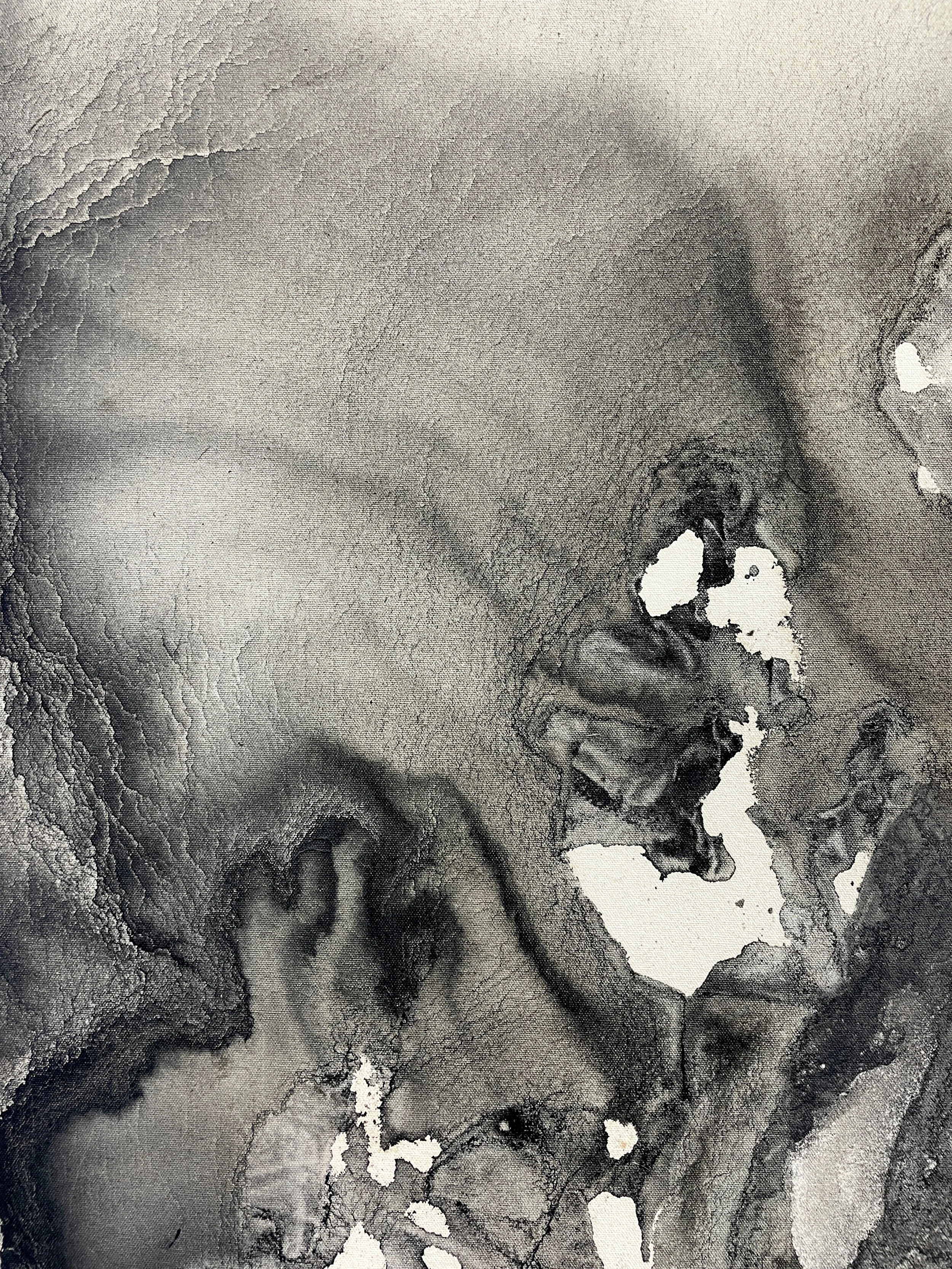
Ecdysis (detail)
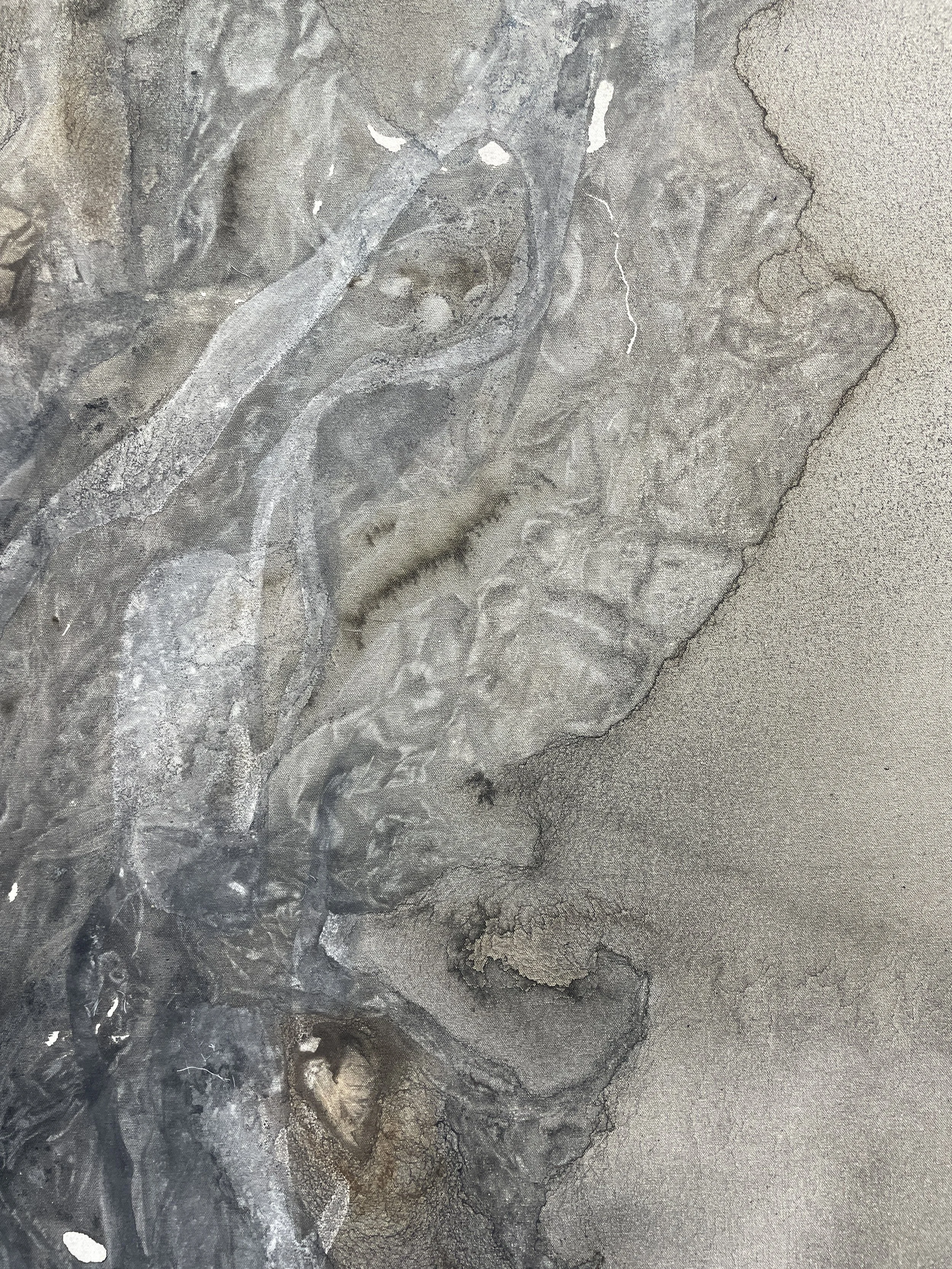
Ecdysis (detail)
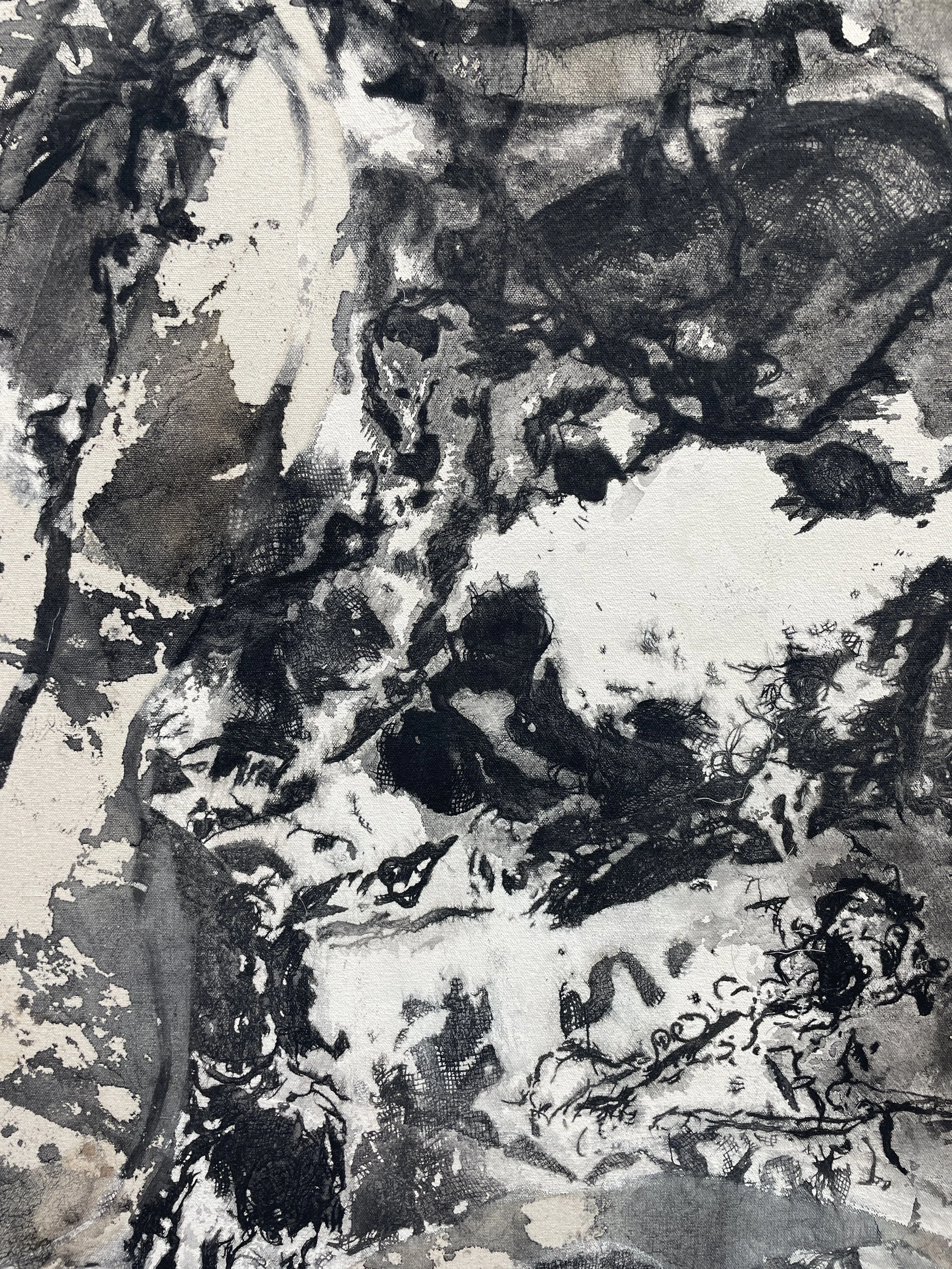
Ecdysis (detail)
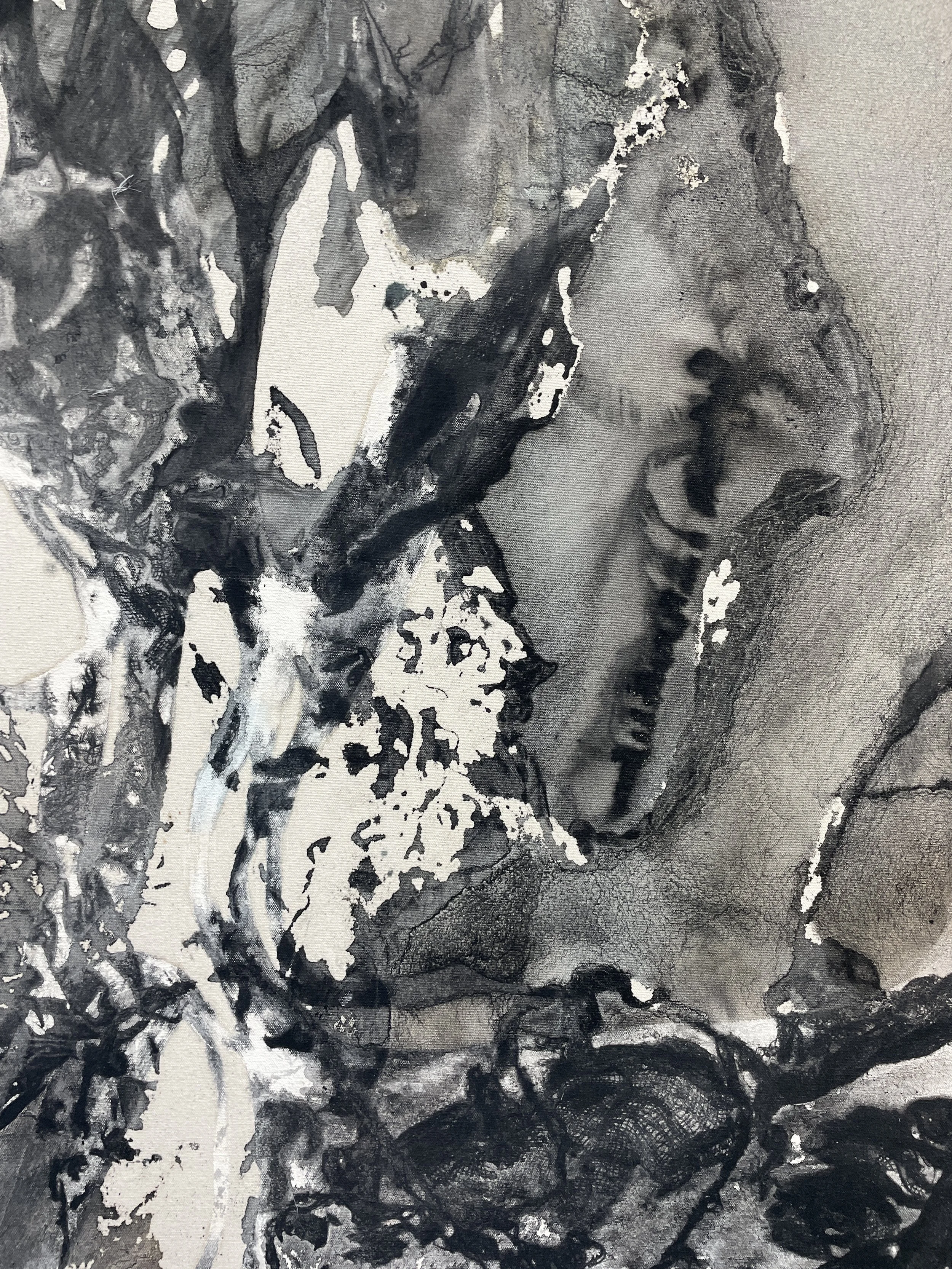
Ecdysis (detail)
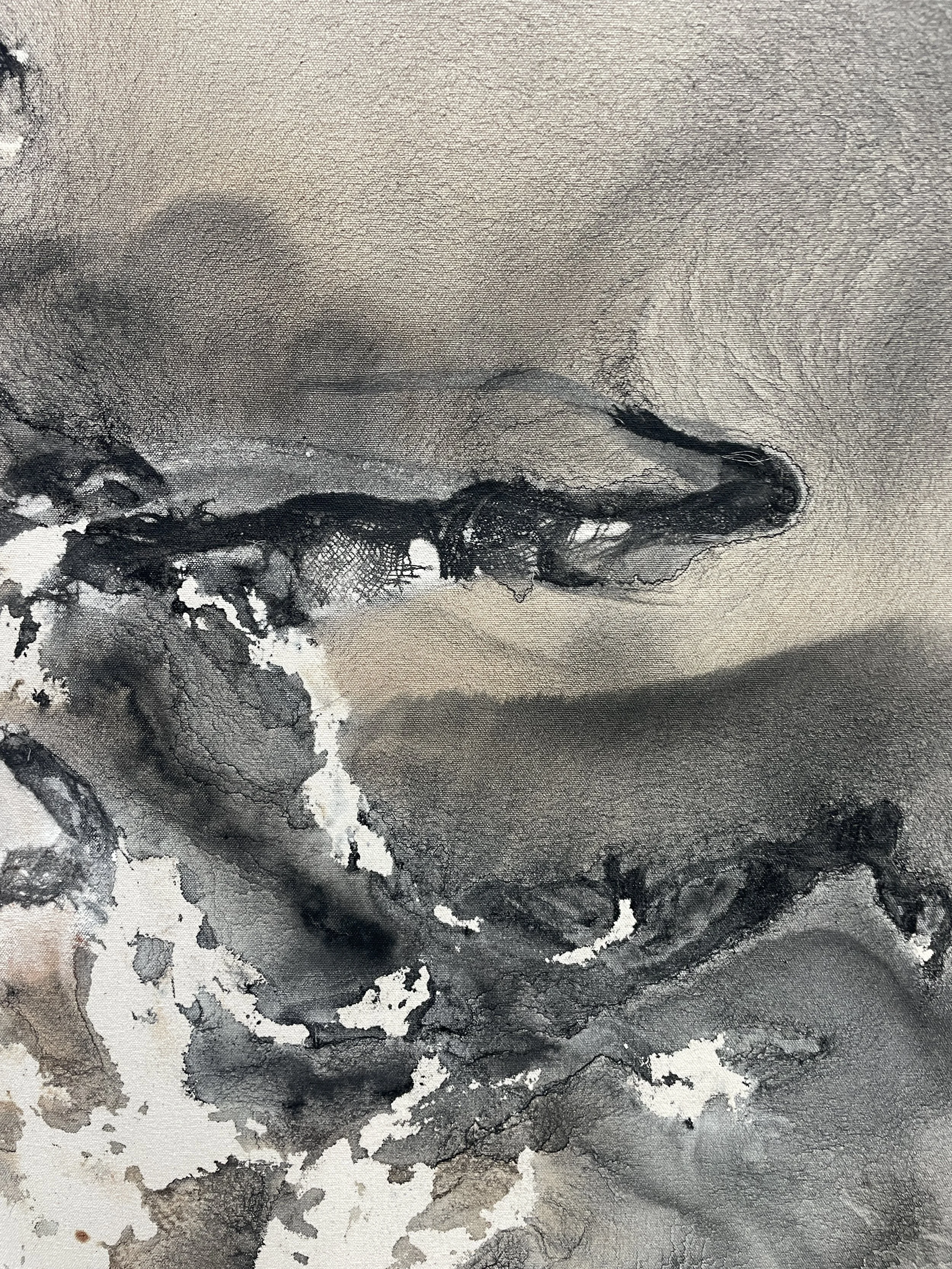
Ecdysis (detail)
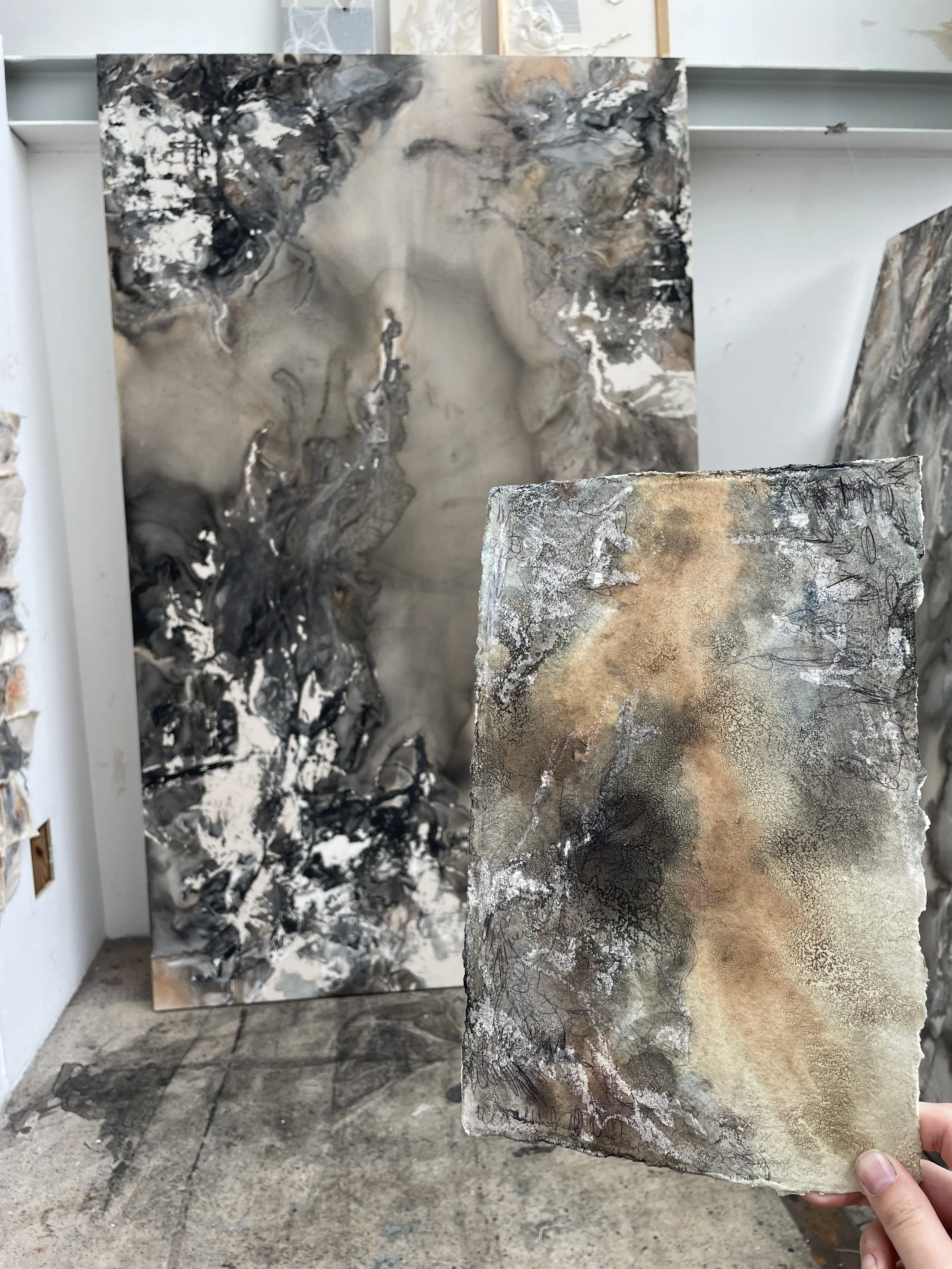
Ecdysis Study
Topophilia
Topophilia describes the sense of place that humans entwine with their environment. Since moving to London, my idea of home and where I’d like to nest or create temporary homes has been at the forefront of my attention. While my work and this series painting could be described as a form of landscape, it is not describing a specific place but an accumulation of my experiences in nature and traveling from home to home. Additionally, my studies into ecology fuel my understanding of relationships between living organisms and fosters unique painting processes inspired by the environment. This is also the reason for my choice in medium–materials that support a more sustainable painting practice.
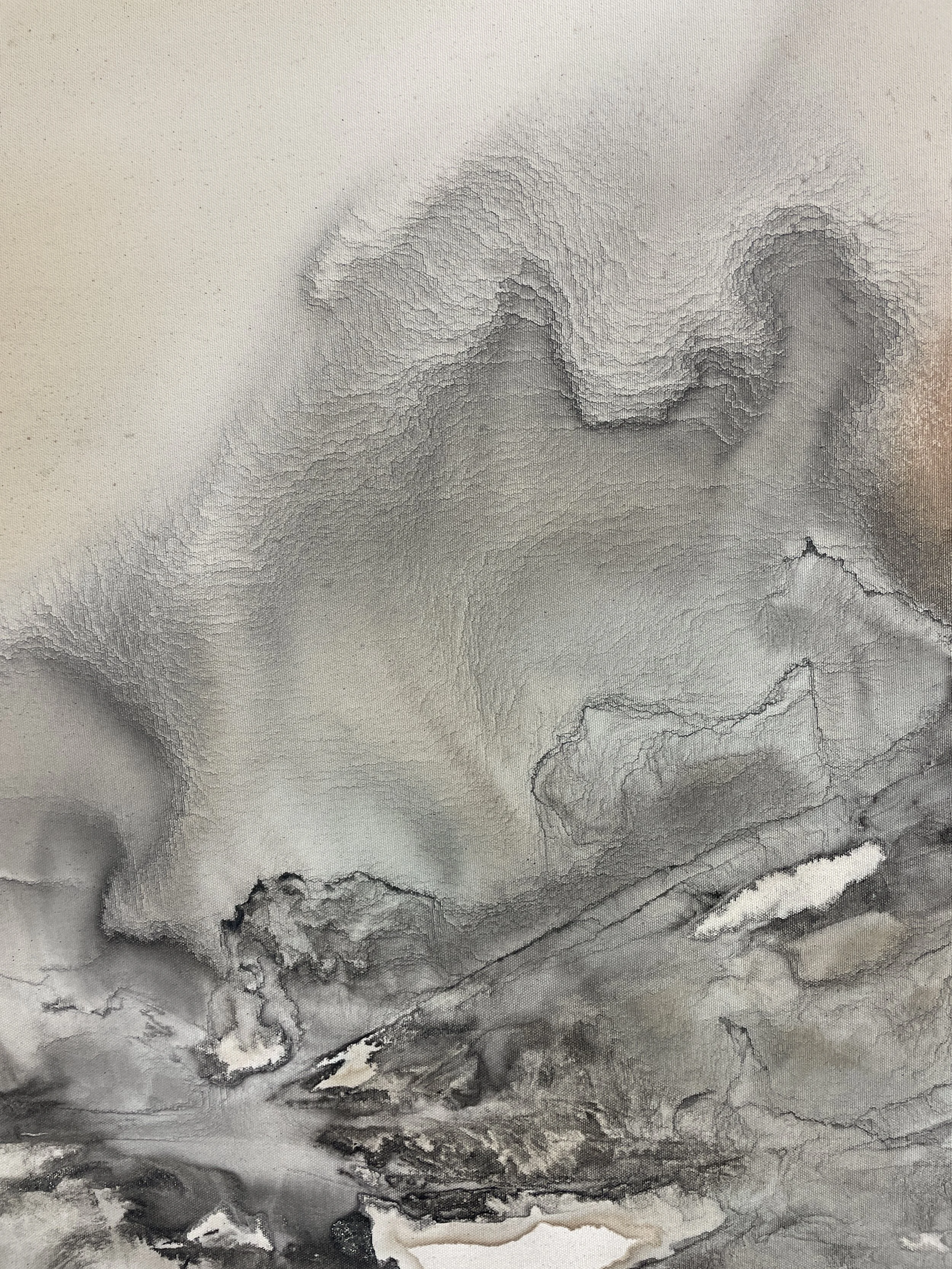

Topophilia I, ink on canvas, 120x150cm, 2023
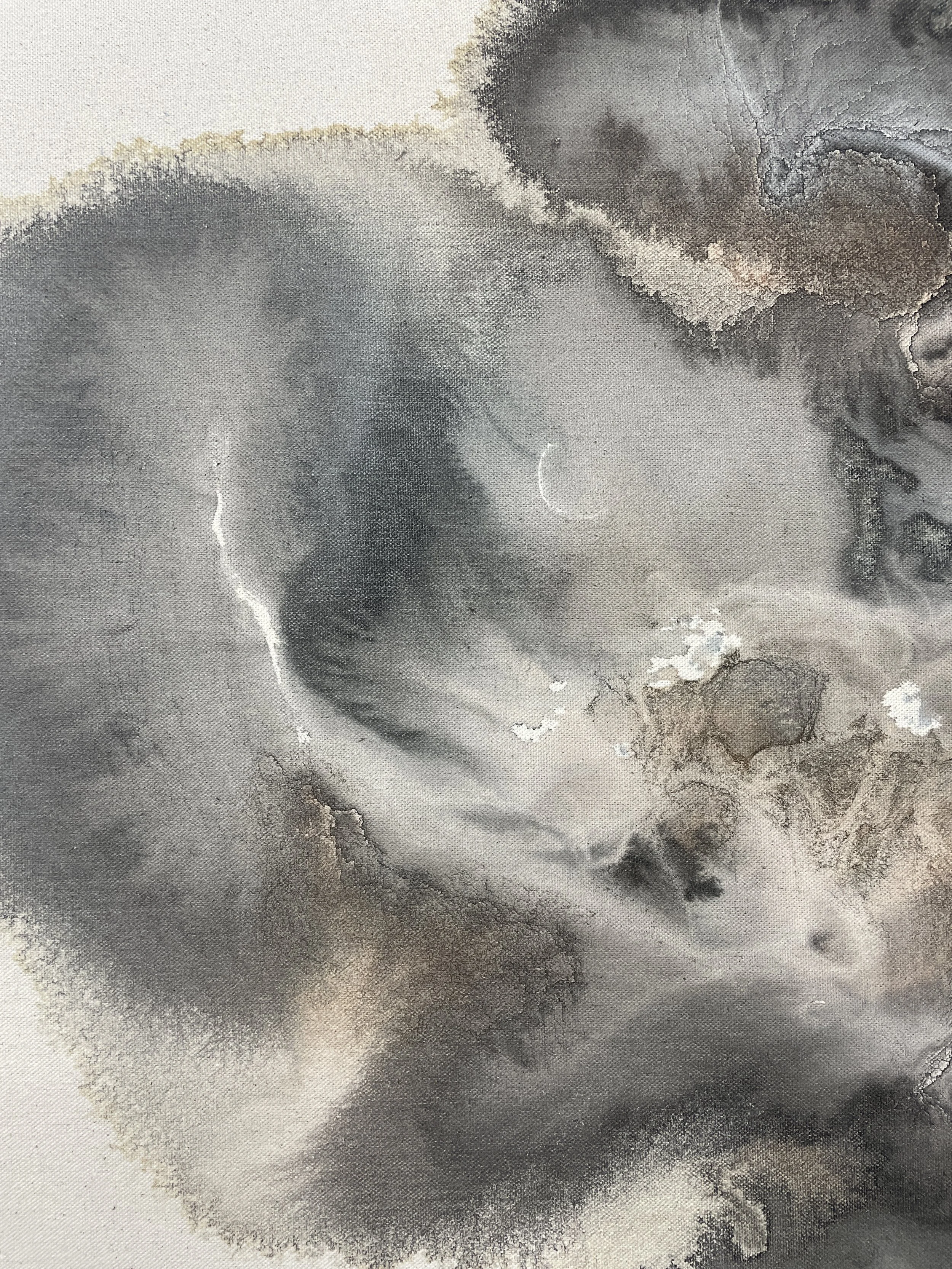
Topophilia I (detail)
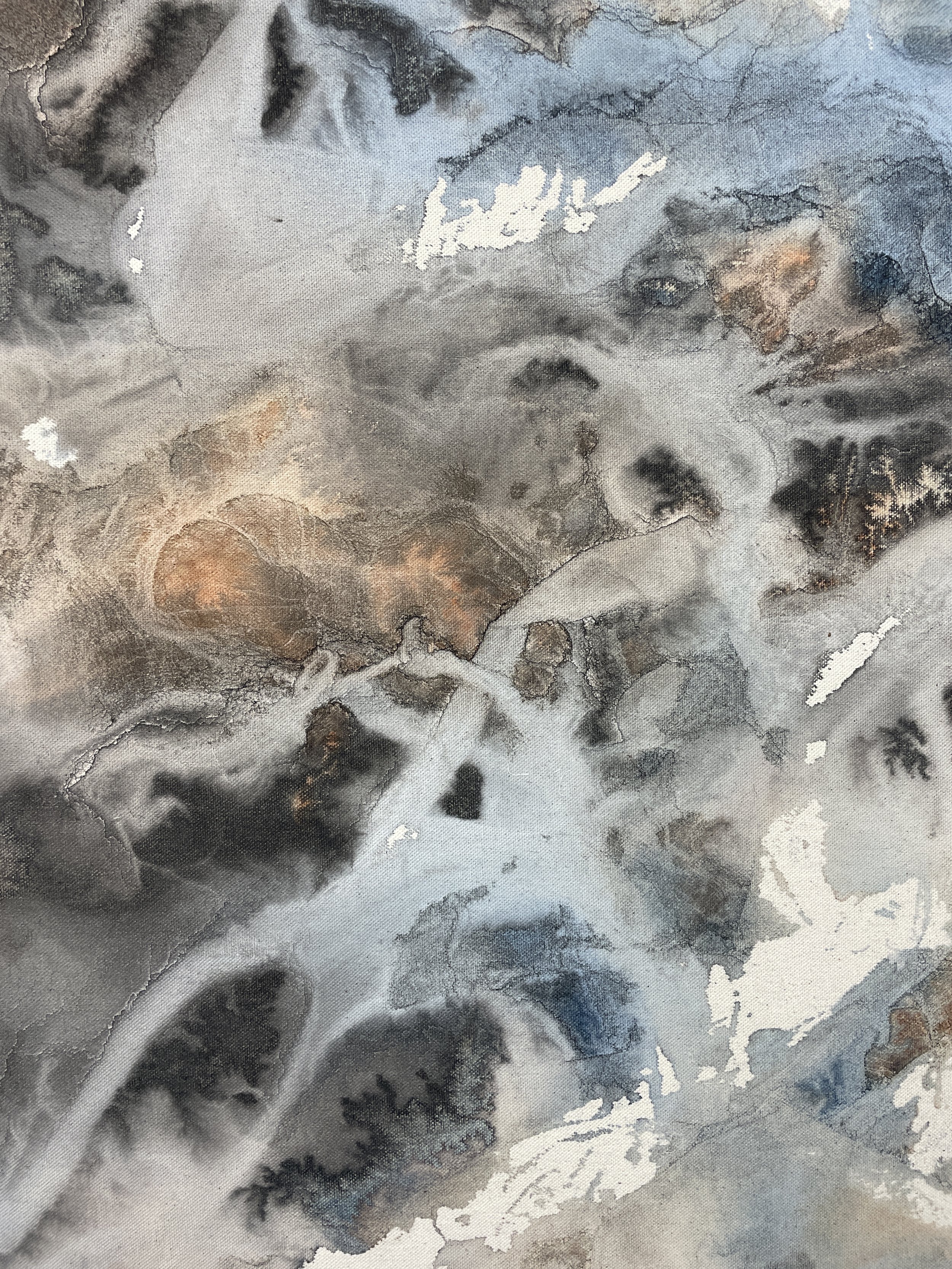
Topophilia I (detail)

Topophilia II, ink on canvas, 120x150cm, 2024
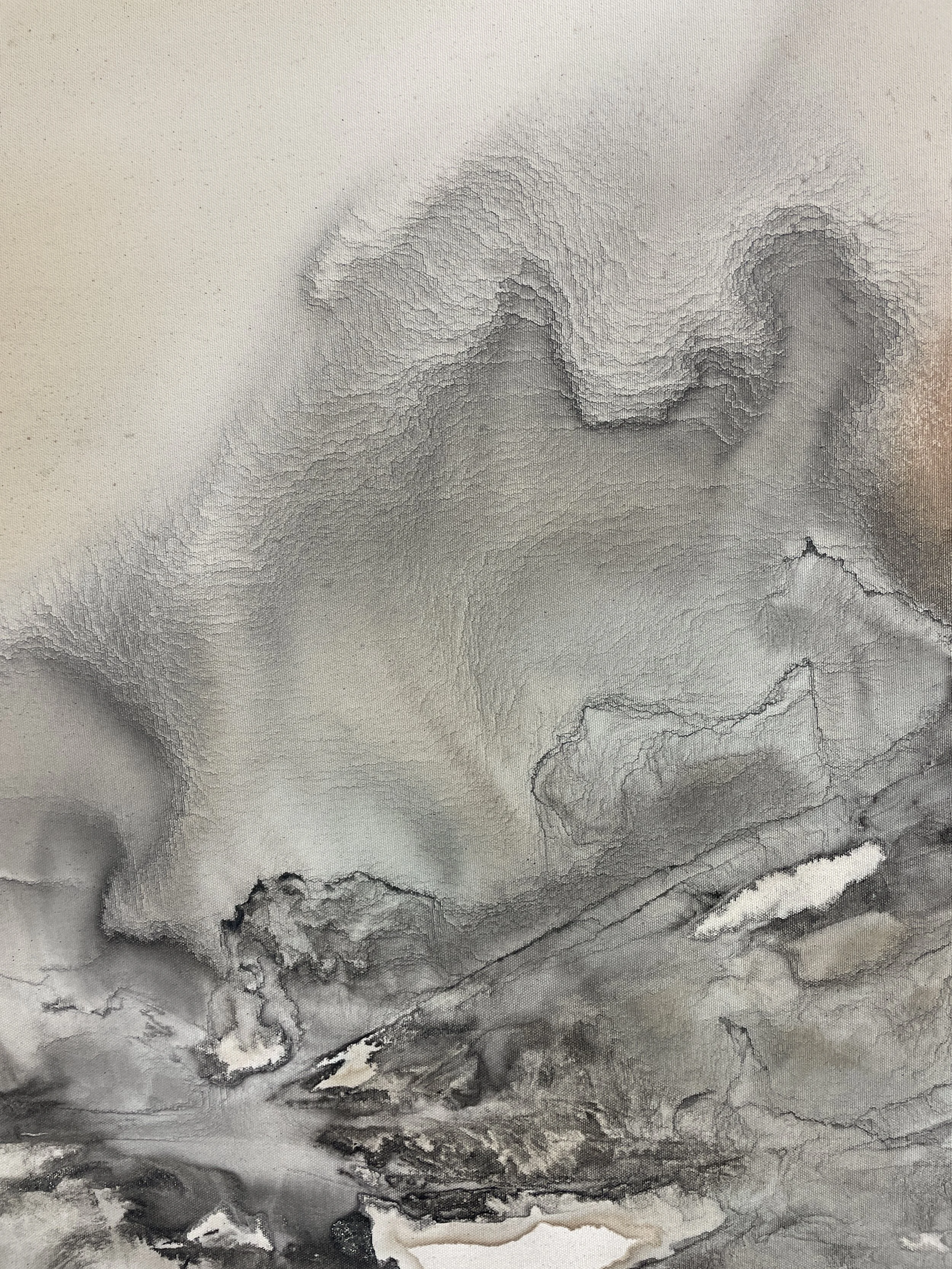
Topophilia II (detail)
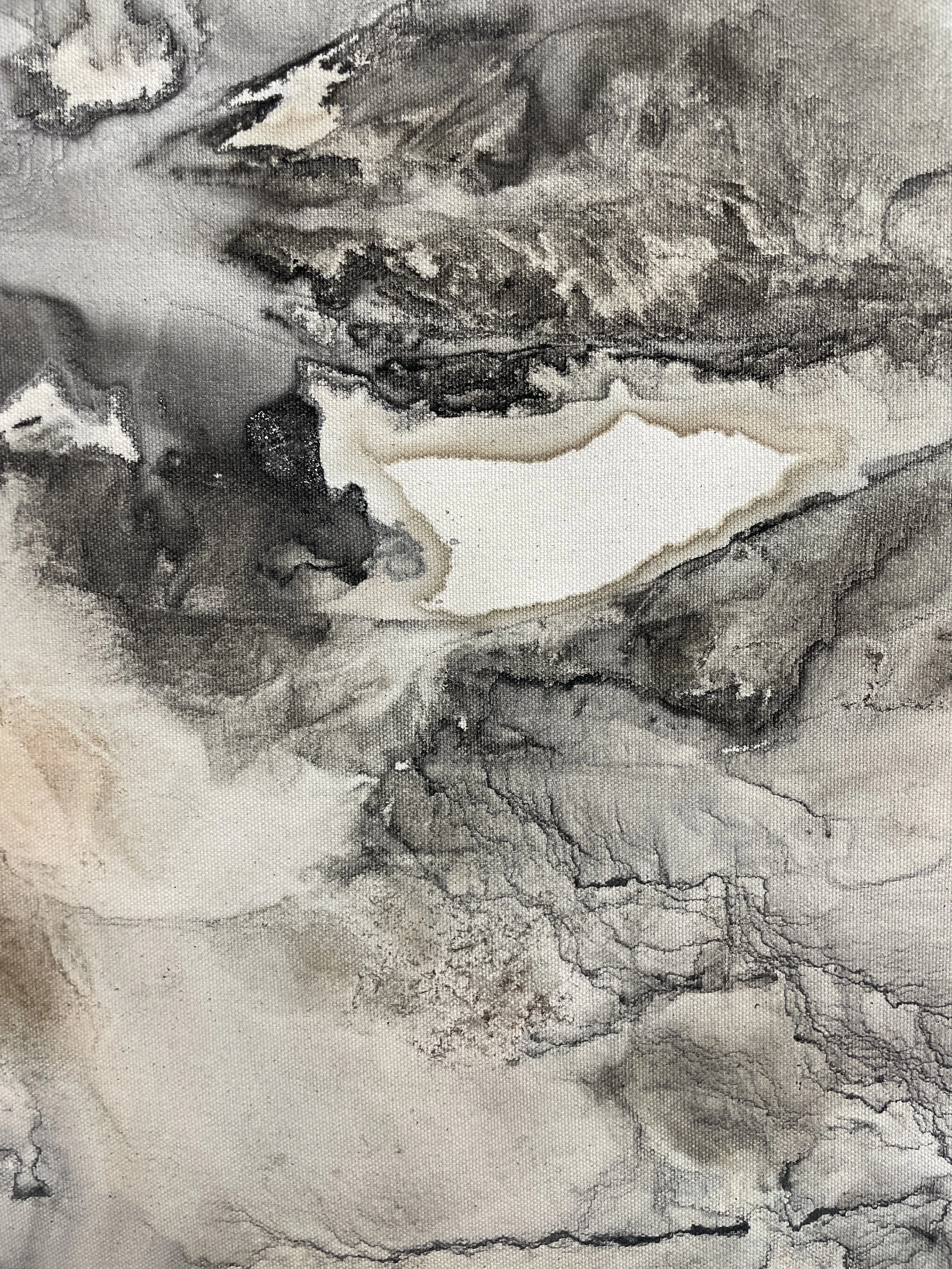
Topophilia II (detail)

Topophilia III, ink on canvas, 60x80cm, 2024

Topophilia IV, ink on canvas, 110x135cm, 2024
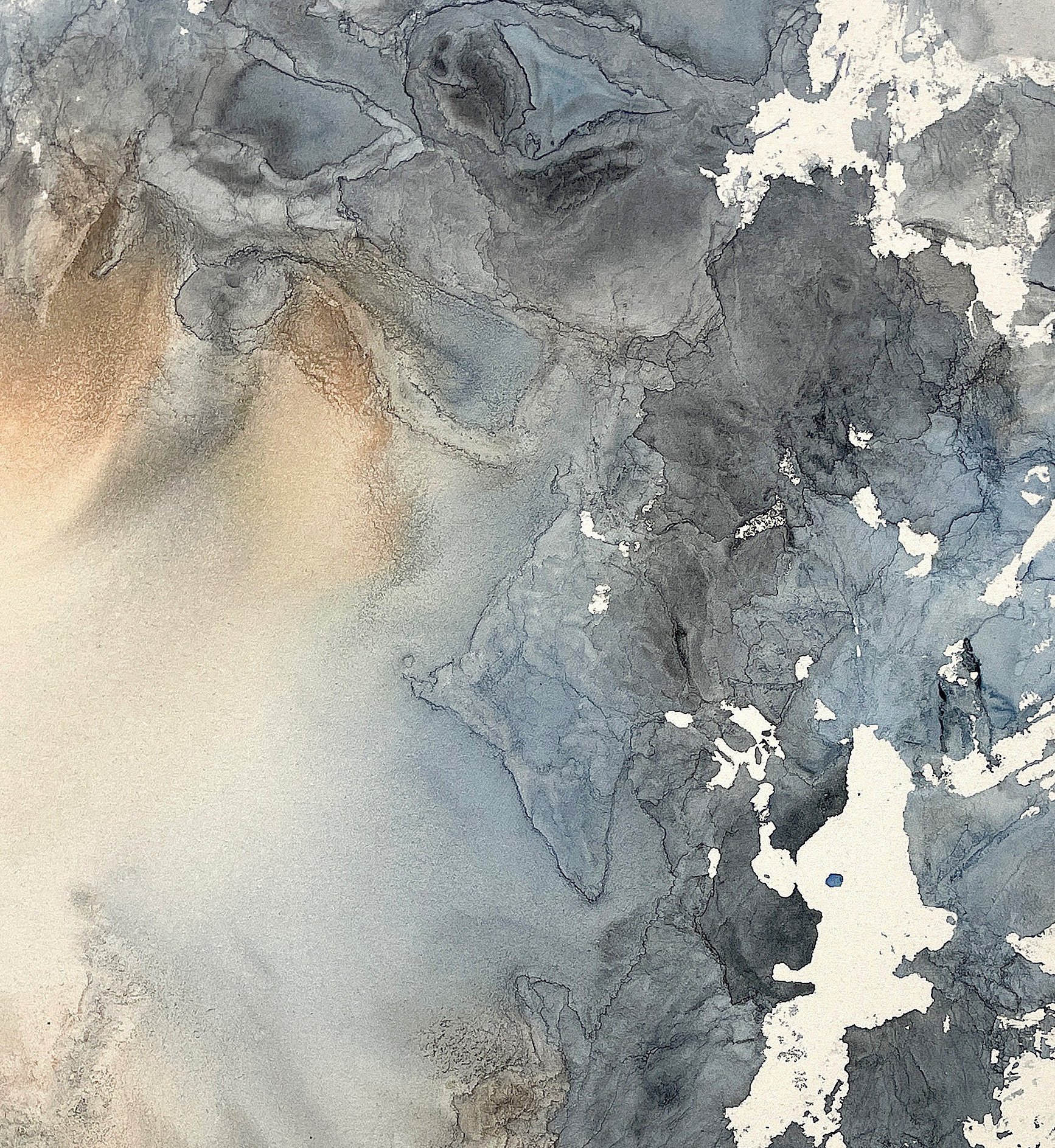
Topophilia IV (detail)
ECDYSIS: RESEARCH ESSAY (2024)
Introduction/Abstract
My year at the Royal College of Art has been transformative, marked by my move to London in September and redefining my artistic practice. In this paper, I explore my creative methods and experiments, emphasizing their parallels with natural processes. Key sections include:
Capillary Action, Water, and Ink: Investigating the properties of how water and ink can move through textiles.
Desiccation and Surface: Examining the drying process on canvas and the incubation period for paintings.
Molting and Textiles: Exploring the shedding of layers to reveal underlying surfaces, akin to natural molting.
Studio as Nest, Installation, Ecosystem, and Lab: Understanding the studio as an active space for comfort, creation, experimentation, and research.
Symbiosis and Coevolution: Concluding with reflections on the interconnected evolution of my art, life, and practice.
Capillary Action, Water, and Ink
My artistic journey has been about shedding expectations and embracing humility in my use of materials. Fascinated by the natural world, I realized that replicating its patterns through traditional drawing or painting methods is not possible. However, combining water, canvas, and fabric revealed how the properties of water and capillary action could create such structures.
Capillary action, observed when water “climbs” fabric against gravity, is crucial for life–enabling plants and trees to transport water and nutrients from roots to leaves. Applying this to painting, I found that setting up my canvases under specific conditions allows water to carry pigments for me. Wetting the entire surface creates chains of water molecules to transport ink. Using a variety of fabrics on top also creates impressions and different drying rates. These elements add another level of complexity to the mark-making and textures. This method feels like a collaboration with inks, tea, water, and fabrics, acknowledging their agency and non-human intelligence that surpasses my own painting abilities.
My interest in microscopic creatures and plants this year has broadened my perspective. As Timothy Morton writes in Being Ecological, “You start to realize that this isn’t just your very own world” (Morten 25). Recognizing the intelligence of these organisms and inanimate elements humbles and reshapes my understanding of intelligence and artistic processes beyond human impulses.
Creating a familiarity with the water and inks has proven to be beneficial in many ways. These techniques relate more to dyeing fibers than traditional painting, treating the canvas as fabric first and surface second–finding ways to paint in and on the canvas. It also allows me to create large, rich paintings with minimal pigments, helping to form a more sustainable art practice. And lastly, utilizing the canvas in this way allows it to retain its textile-quality and resiliency for sewing, recombination, and folding.
Desiccation: Canvas and Surface
I work with my paintings or fibers flat on the ground and heavily water the canvas with a spray bottle or watering-can. I feel like a gardener, particularly when the studios are warm and the added humidity feels like a greenhouse. It typically takes anywhere from one to four days to dry, depending on the specific adjustments of each experiment. This incubation period tests my patience, but also offers opportunities for observation, to adjust the fabrics, and to add sprays of ink and water.
A key step, then, is the complete desiccation of the canvas and the textiles on top of the surface. Desiccation, the removal of moisture, is frequently fatal for many organisms and has led to the evolution of elements like exoskeletons in arthropods to help protect against water loss. As Herbert Ross notes in A Textbook of Entomology, “Loss of water by evaporation is the greatest threat to terrestrial organisms, and all insects are terrestrial or aerial for at least some portion of their lives.”
Initially, I was unsure about my paintings being “finished” after desiccation. However, further research revealed that there are many organisms that do not die from desiccation, like mosses and lichens. Robin Kimmerer writes in Gathering Moss: “But most mosses are immune to death by drying. For them, desiccation is simply a temporary interruption in life” (Kimmerer 40). These organisms can reactivate and photosynthesize with the first rainfall. Similarly, my paintings can be reactivated or edited with subsequent water treatments, making their finished state a temporary pause rather than a final form. This concept aligns with the idea that paintings constantly can evolve and change both within the studio and as they travel to different environments.
After removing the textiles on the canvas, the inks on the surface have actually formed topographical variations. They mimic the shapes and forms of rocks, mosses, lichen, fungi, etc. and this process aids me in my goal is to capture these different moments and textures of the natural world on canvas. I seek to relate my work to landscapes on both macro and microscopic scales and to understand my position in this temporal passage. Thus, this incubation period is important as I ponder: How can I record my passage of time in the natural world while engaging with the ancient timescales of rocks, lichen, and moss?
Molting: Muslin, Cheesecloth, Jute, Paper, Canvas, and Plants
This year, I have cultivated a deeper relationship with my materials. Previously, I used fabrics and papers as surfaces for acrylic and oil painting. Now, my approach has shifted: the painting occurs beneath the fabrics, only revealed once they are peeled away.
Molting, the process of shedding skin, hair, feathers, or exoskeletons, has become a crucial concept in my work. This natural process, which includes humans shedding skin and hair, allows for the generation of new cells and growth. Initially, I adhered cheesecloth to canvas with a PVA-water mixture. However, as seen in The Nursery, a quilt from earlier this year, I realized the strength and necessity of removing these elements from the surface. This method, using acrylic paint and PVA, began to feel inconsistent with my research into ecology and sustainability. This led me to explore ink, tea, and other natural pigments.
The title of my degree show piece, Ecdysis, refers to arthropods and reptiles shedding their exoskeletons. It is actually this painting that taught me this term, as I quickly realized that it was not a landscape but referring to one of these critical moments in an organism’s life cycle. Eleanor Morgan describes this in Gossamer Days: “It is early autumn and she [a spider] is at her largest, having shed her exoskeleton eight times since the spring...Any injury she has sustained over the year, such as losing a leg, has been repaired through the shedding and regrowth of her outer skeleton” (Morgan). While uncomfortable, this description reveals the strength and resiliency of going through this kind of vulnerable process.
My painting process mirrors ecdysis, peeling back layers of fabric to reveal the surface beneath. Reusing fabrics fosters an interconnectivity between paintings. These “creatures” or fabrics move around my studio, contributing to the creation process and operating as their own art forms. I find that Virginia Woolf describes this well as she writes in Orlando, “...everything was partly something else, and each gained an odd moving power from this union of itself and something not itself so that with this mixture of truth and falsehood her mind became like a forest in which things moved; lights and shadows changed, and one thing became another” (Woolf 323). While stretcher bars seem to pluck out these moments in a studio and separate paintings, it is essential for me, conceptually, to foster them together before individual pieces might leave the nest-studio.
Personally, I relate to this concept of molting far more than metamorphosis, as it’s a process that organisms go through many times throughout their lifespan. While we are constantly pushing ourselves through these versions of ourselves, my experience in London has been an extreme version of this moment. Enduring this discomfort ultimately proved to be beneficial, even though it required shedding previous versions of myself. And yet, I have not chemically recombined myself, as in metamorphosis, just simply expanded and made more room for growth.
Studio as Nest, Installation, Ecosystem, and Lab
The studio is a vital space for any artist, and my experience is no exception. Moving to London for this degree, I immediately aimed to transform my studio into a nest by gathering many fabrics and miscellaneous objects. Similar to a nest, a seemingly random assortment of objects can come together to create a sense of home.
This nest-like quality naturally lent itself to installation and fragmentation as a form of sketching. Scraps and various elements pinned together on walls and floors became a way to think through my materials. While I love installations, I did not envision that direction for this degree show, though it’s something I look forward to exploring in future exhibitions.
I also ponder how the studio itself can function as an installation space–an active and living ecosystem. The nature of my space is rooted in research into ecology, emphasizing the study of relationships between organisms. My paintings, while capable of existing independently, are part of a community of pieces, sketches, and ideas that interconnect in this ecosystem.
The overlap of my studio as an ecosystem and a lab highlights the intimate study and understanding of materials and their inherent qualities. What can these materials teach me? How do they respond to various treatments? Studying these reactions allows me to replicate and enhance them. Research and art are not separate entities but co-evolving processes that inspire and create new ways to understand and engage with the world.
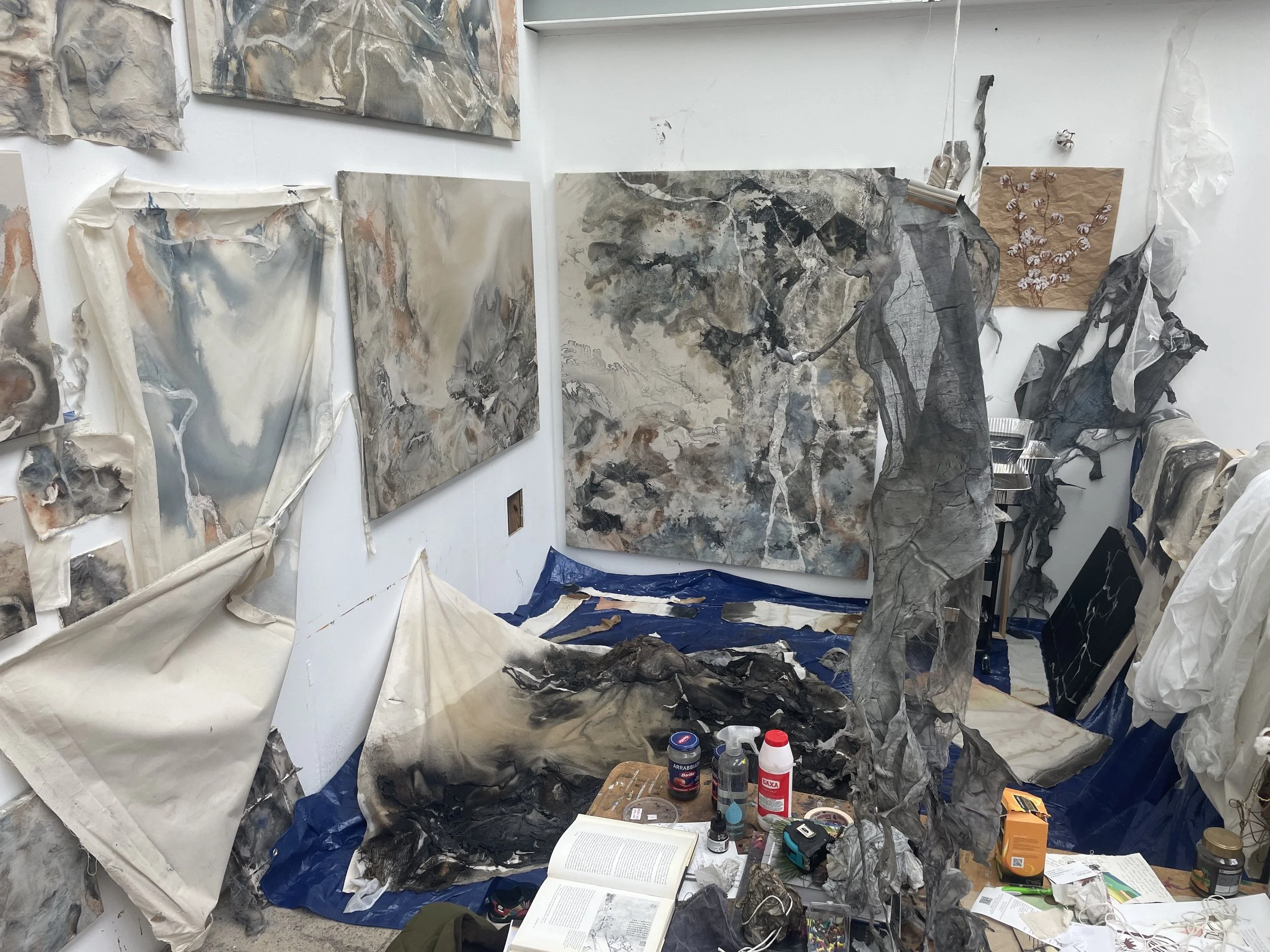
A moment in my studio at the Royal College of Art, 2024
Conclusion: Coevolution and Symbiosis
This year’s studio practice represents a moment in my journey as an artist, one that will continue to evolve. The concept of symbiosis resonates deeply with me as I reflect on my relationships with myself, my art practice, my studio, my peers, and my place in the (art) world. Ideally, these relationships are mutualistic, allowing us to benefit and grow together. However, as in nature, they can also be disharmonious, sometimes even detrimental or parasitic.
My goal is to cultivate and maintain a trust in my process, materials, and research to create art that nourishes both myself and my work. I believe this mutual nourishment is the only sustainable way to live as an artist. Finding one’s place in the world can be challenging, yet I draw strength from the resilience of moss, which manages to grow even in the cracks of city bricks. This resilience is something I admire in my studies of various creatures and aspire to embody in my own life and art—a perseverance to connect and grow.
The coevolution of art and artist is always in direct response to environmental stimuli. As I continue my journey in the London ecosystem, I look forward to seeing how this dynamic relationship evolves in the coming year.